
Reliable & Fast Door-to-Door Shipping from UAE to Syria
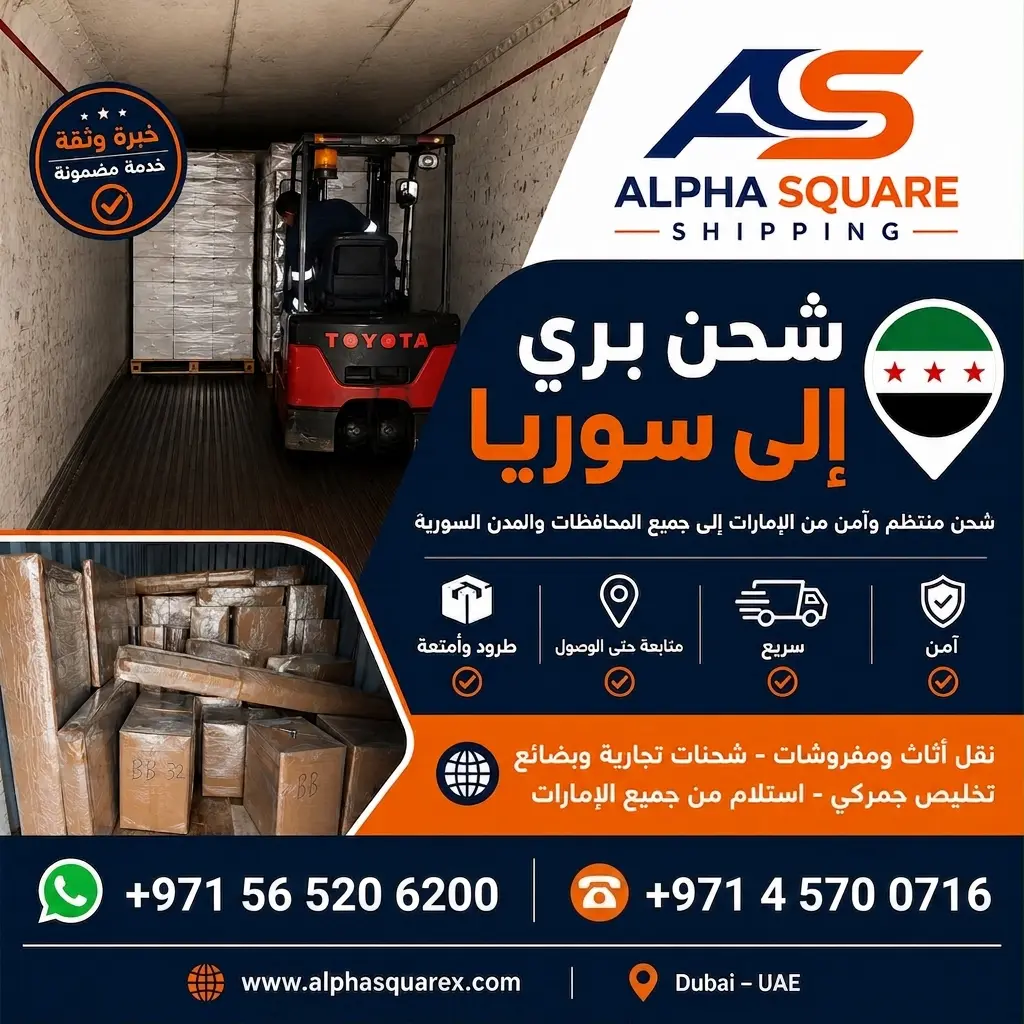
Are you looking for a trusted logistics partner to transport goods safely from the United Arab Emirates to Syria? At Alpha Square Shipping , we specialize in providing top-tier cargo and freight solutions tailored to your specific needs. Whether you are sending personal belongings, commercial goods, or heavy machinery, our dedicated team ensures your items arrive on time and in perfect condition.
Why Choose Alpha Square Shipping for Shipping to Syria?
Navigating cross-border logistics requires experience, precision, and reliable networks. Consequently, Alpha Square Shipping has streamlined the entire process to make shipping from Dubai, Abu Dhabi, or Sharjah to any Syrian city seamless and stress-free.
- Door-to-Door Service: First, we pick up your shipment directly from your doorstep in the UAE and deliver it straight to your address in Syria.
- Comprehensive Customs Clearance: In addition, our expert team handles all required documentation and customs clearances at every border crossing.
- Flexible Freight Options: Furthermore, we offer land freight, air cargo, and sea shipping depending on your budget and urgency.
- Real-Time Tracking: As a result of our advanced logistics system, you can monitor your shipment’s journey every step of the way.
Our Range of Cargo Services
In order to meet diverse customer demands, Alpha Square Shipping provides a full spectrum of shipping solutions:
Land Freight to Syria
Land transportation remains the most economical choice for large volumes and commercial cargo. Therefore, we operate regular truck fleets connecting the UAE directly to major Syrian hub cities including Damascus, Aleppo, Homs, and Latakia.
Air Freight Solutions
When speed is your highest priority, our air cargo service delivers. Because we partner with leading regional airlines, we guarantee swift customs processing and rapid transit times for time-sensitive packages.
Commercial & Personal Express Cargo
Whether you are an exporter shipping commercial merchandise or an individual sending personal gifts to family, Alpha Square Shipping treats every package with equal care and professionalism.
Logisco Values
How Our Shipping Process Works
Shipping with Alpha Square Shipping is designed to be quick and simple:
Request a Quote: Contact us with your cargo dimensions, weight, and destination.
Pickup & Inspection: We arrange a pickup from anywhere in the UAE and ensure proper packaging.
Transit & Clearance: Meanwhile, our customs team processes all necessary legal clearances.
Final Delivery: Finally, your shipment is safely delivered to the final recipient in Syria.


Frequently Asked Questions (FAQ)
What is the estimated delivery time from the UAE to Syria? Transit times depend on the service chosen. Air freight typically takes 3 to 5 business days, whereas land freight usually takes between 10 to 15 days depending on customs processing at the borders.
How is shipping cost calculated? Shipping rates are determined by either the actual weight or the volumetric weight of the package, as well as the chosen transport mode (Land, Air, or Sea). Contact Alpha Square Shipping for an instant, transparent quote with no hidden fees.
Are my goods insured during transport? Yes. For your total peace of mind, Alpha Square Shipping offers optional comprehensive cargo insurance covering loss or damage during transit.
Ship with Alpha Square Shipping Today!
Ready to send your shipment safely from the UAE to Syria? Contact Alpha Square Shipping today for an instant quote and experience hassle-free logistics solutions tailored just for you.





Get best Transportation Services
Are you looking for a trusted logistics partner to transport goods safely from the United Arab Emirates to Syria? At Alpha Square Shipping